

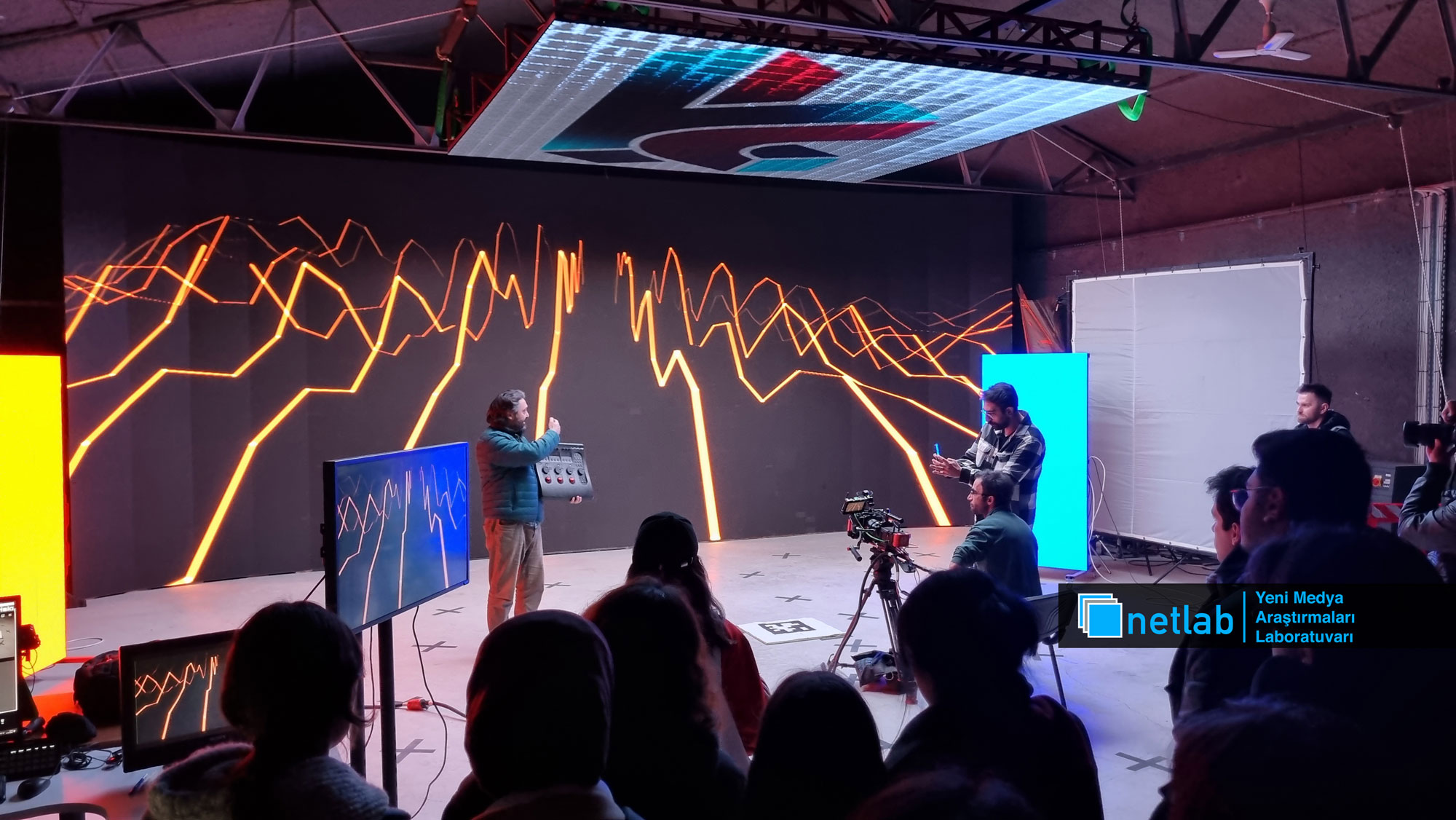
Within the scope of the NETlab Technology Seminars, the sessions held on December 11 and December 18, 2025, focused on the software and hardware pillars of production processes. In this event, organized in collaboration with Kule Film XR Studio Hub, VP supervisor Emre Şan, examined the technical infrastructure of virtual production systems through camera tracking, lens calibration, real-time render engines, and XR-based production practices. Drawing from Şan’s digital studio experiences in Türkiye and Czechia, this session provided a detailed technical reading of "how virtual production works."
In Pursuit of Invisible Data: Camera Tracking Systems
While sharing the components of virtual production with the participants, Emre Şan emphasized that camera tracking systems are the most critical hardware in the system. He highlighted that this technology transforms the camera from a mere recording device into an active component that constantly generates position and orientation data in 3D space. By streaming camera movements into the digital environment in real-time, the correct perspective can be rendered on LED volumes.
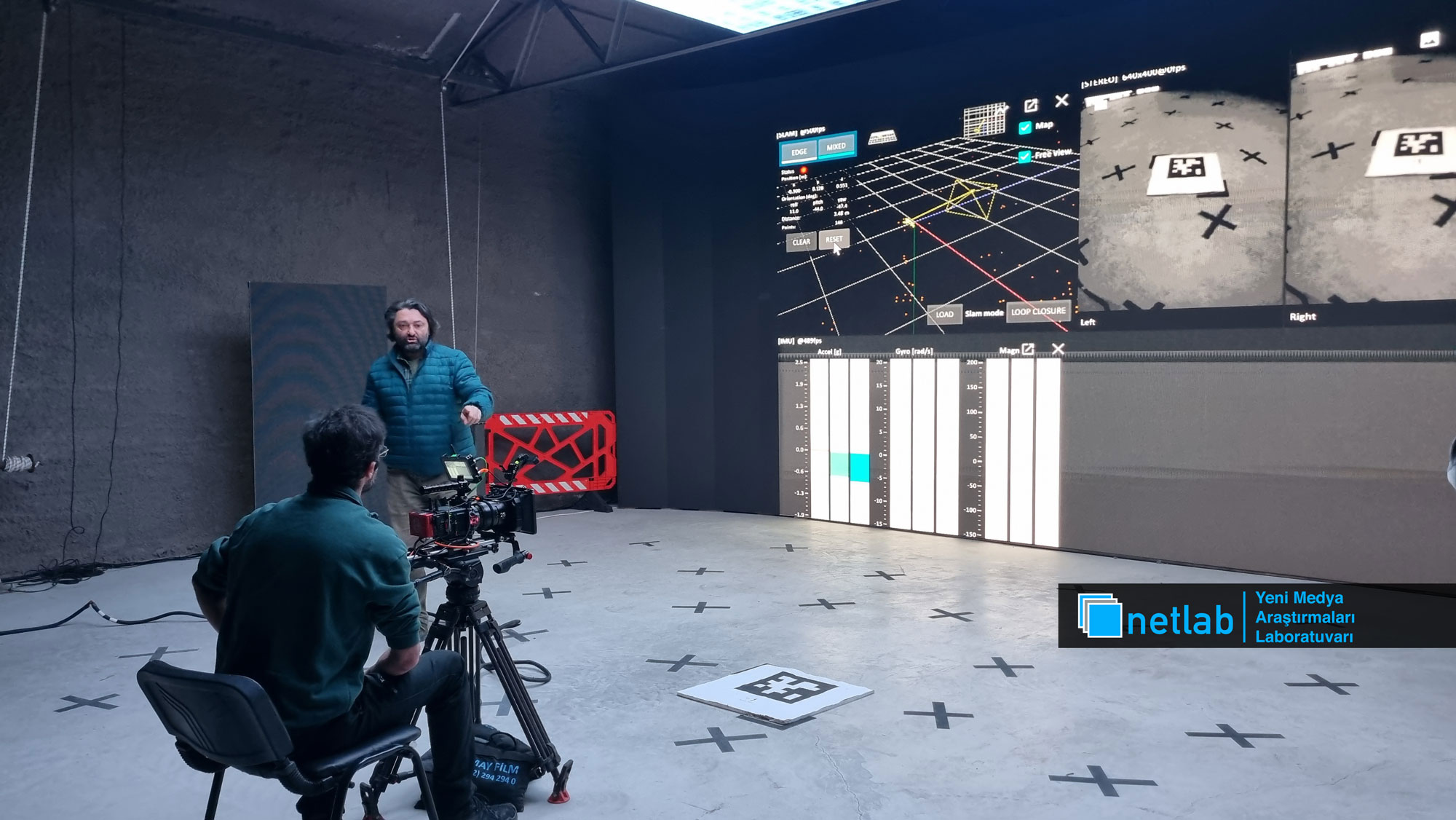
Sensors producing up to 500 frames of data per second transmit even the slightest camera movement to the digital scene simultaneously. This process is monitored continuously via media server software; thus, perspective shifts and visual artifacts are prevented during the shoot, ensuring a consistent and seamless visual illusion within the scene.
Lens Calibration and Nodal Offset: The Delicate Balance Between Digital and Physical
Şan drew particular attention to the importance of lens calibration and nodal offset stages that demand extreme precision. Noting that every lens characteristically distorts an image (especially wide-angle lenses which cause barrel distortion at the edges), Şan stressed that this exact deformation must be simulated within the digital camera in Unreal Engine. He explained that these procedures, performed using specialized calibration panels like the ArUco Board, enable the necessary alignment between the physical camera and the digital stage.
He further noted that if the distance between the tracking device and the camera’s nodal point (the point where light converges) is not calculated accurately, "sliding" or shifts occur in the digital background during camera movement. Neglecting such technical details, Şan stated, directly compromises the credibility of the virtual production—or in other words, shatters the illusion.
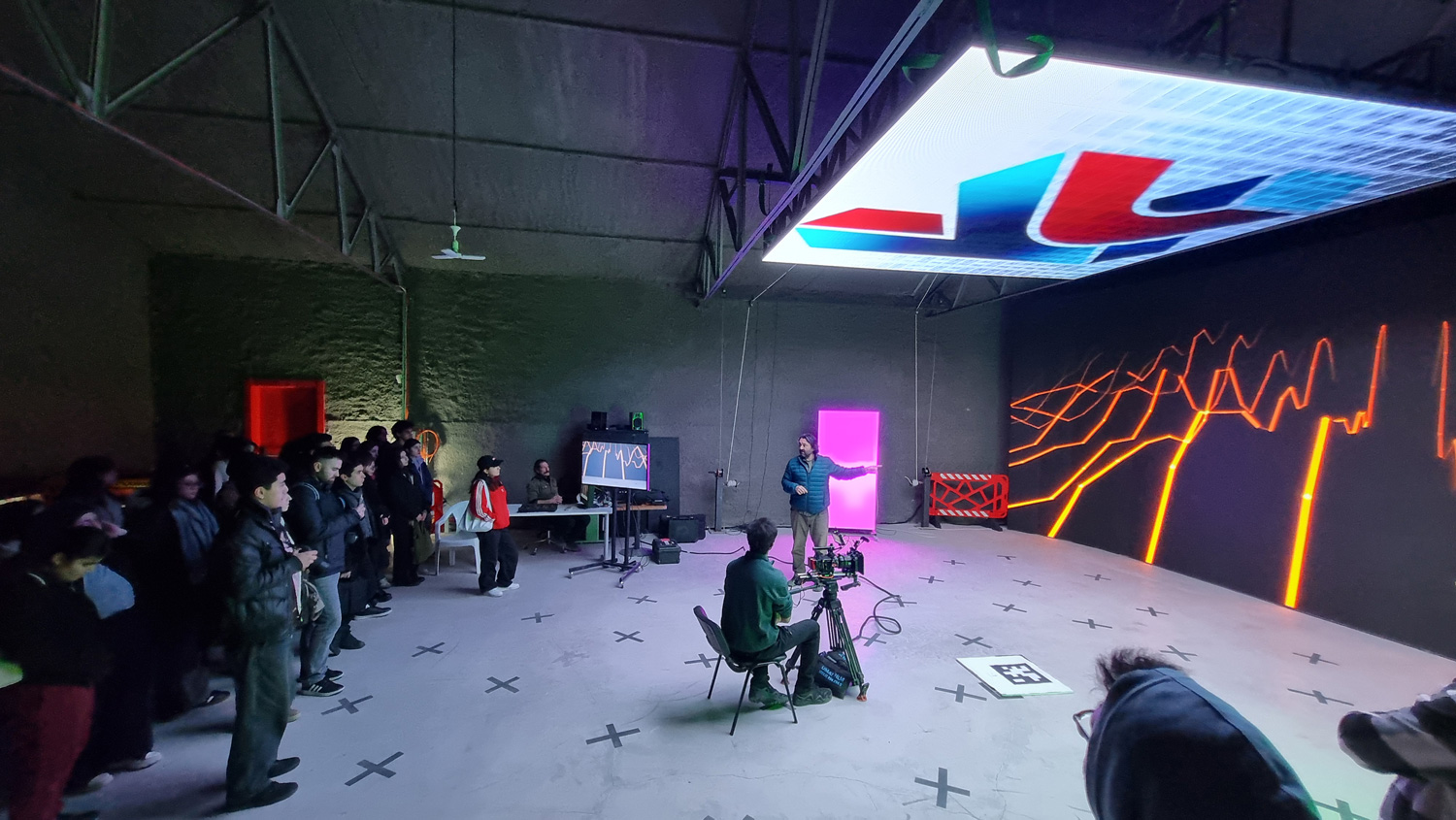
Kule Film XR Studio – Click red buttons for more information about hardware.
Unreal Engine and the Flexibility of Procedural Design
Touching upon the possibilities offered by Unreal Engine as the visual engine of virtual production, Şan noted that real-time rendering capacity provides significant creative flexibility during the shooting process. He stated that through procedural modeling tools (such as Dash), scene components can be organized rapidly; set designers can scatter thousands of objects across a surface in seconds, and environmental elements, lighting direction, and depth of field can be adjusted instantaneously.
Emphasizing that this approach transforms the filming process from a chain of pre-fixed decisions into an experimental, flexible, and interactive production space, Şan expressed that real-time engines offer a major advantage, particularly for creative teams.
XR Technologies and Sustainable Production Practices
Framing virtual production within the context of Extended Reality (XR) Şan reminded the audience that in XR systems, the actors and the physical set are real, while the background is digitally generated. He pointed out that because LED volumes act not just as display surfaces but as active light sources for the scene, natural reflections can be achieved on glass and metallic surfaces. He stressed that this largely eliminates the "unnatural feel" frequently encountered in traditional green box (chroma key) methods.
Addressing the logistical advantages, Şan stated that not having to transport large crews to location shoots both reduces costs and lowers the carbon footprint. He highlighted that the in-camera VFX approach allows for the final image of the scene to be captured at the moment of shooting, which is a key factor in reducing the heavy workload of the post-production process.
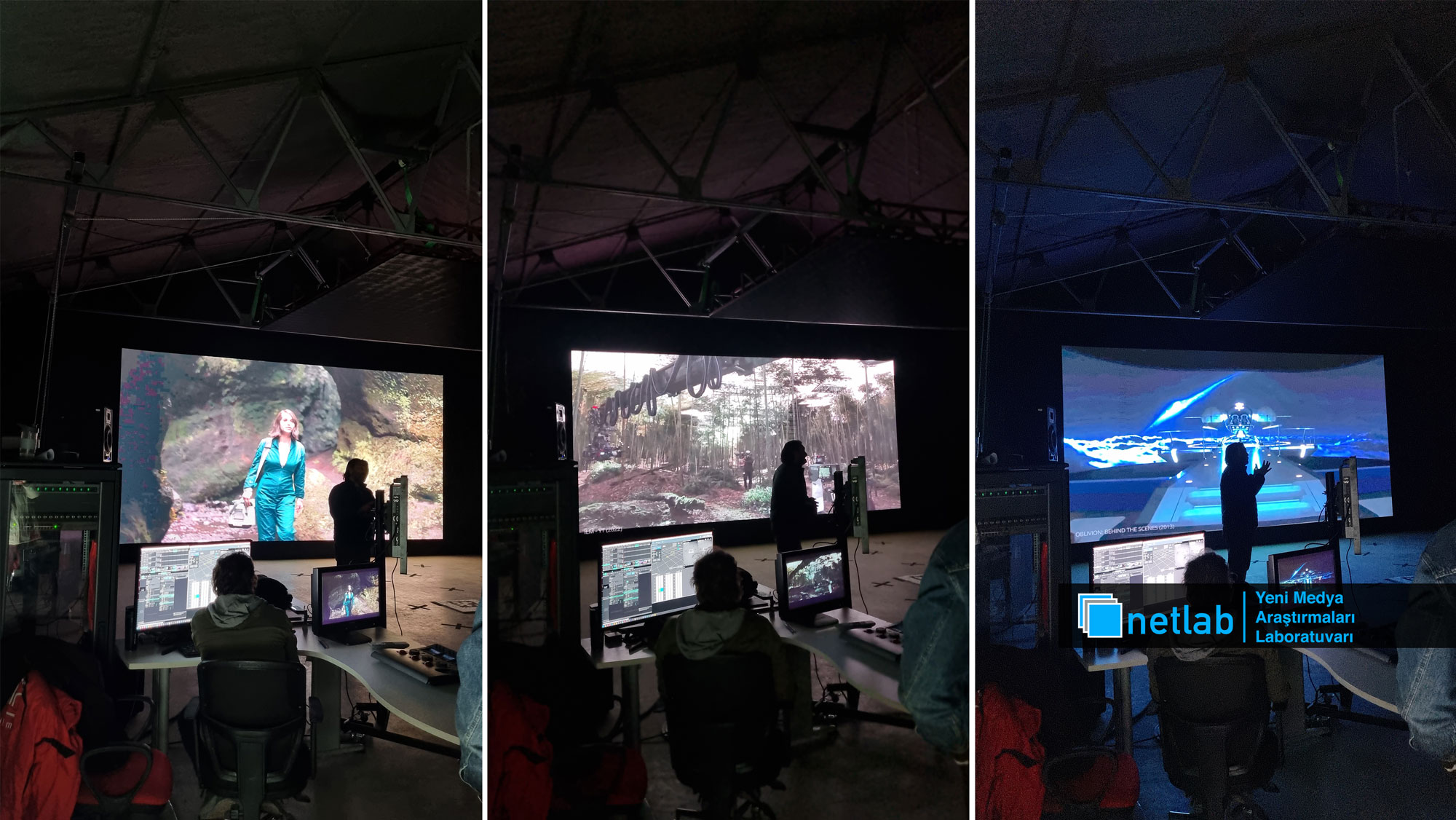
Virtual Production Technologies Explanatory Video
An Education and Production Base in Ankara: The Gölbaşı Hub Vision
Concluding the seminar, Emre Şan shared that the new studio established in Ankara, Gölbaşı, is designed to be more than just a filming location; it is envisioned as a regional education and production hub. Stating the goal for this center to become an educational base serving both Europe and the Middle East, Şan once again emphasized that the industry’s greatest challenge is not a lack of hardware, but rather a shortage of qualified human resources.
In this regard, Şan expressed that prioritizing the training of Cinema-TV and related students as technical and creative teams is a top priority. He advised students to specialize in specific areas, such as environment design, technical direction, or software-oriented roles.
This event once again demonstrated that virtual production is not merely a technical innovation, but a multi-layered field of transformation that must be addressed alongside its educational, production, and employment dimensions.
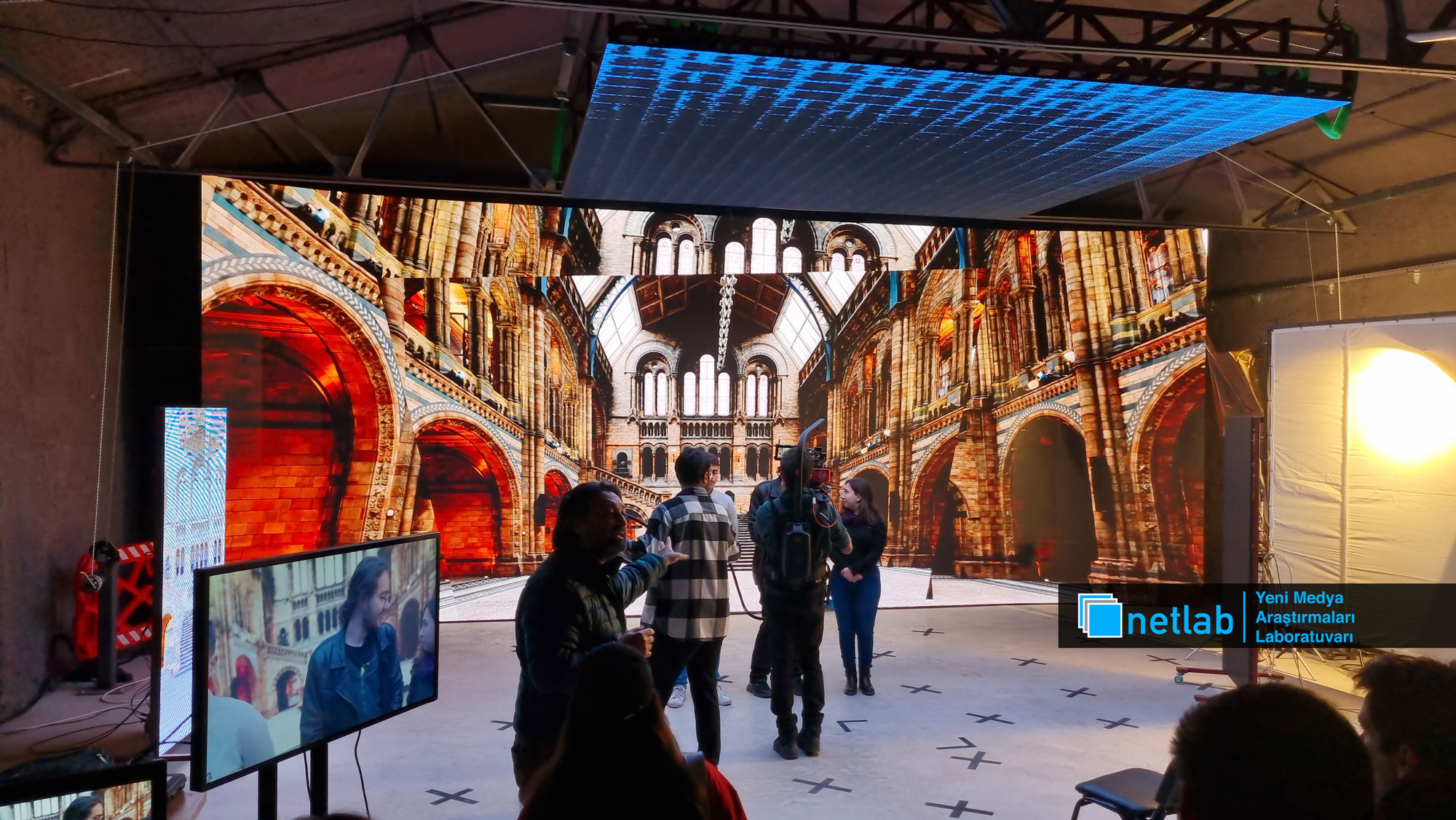
This article was prepared by Şafak Dikmen, based on the technical data, industry analysis, and professional experiences shared during Emre Şan’s presentation. Various Artificial Intelligence tools were utilized in the production of the visual and written content.
We would like to extend our gratitude to Emre Şan, Kağan Daldal, and the KuleXR Studios & HUB team for their invaluable contributions.
Tags: #EmreŞan #VirtualProduction #CinemaTechnologies #NETlab #İLEF #CameraTracking #UnrealEngine #LensCalibration #GölbaşıHub #XR #CinemaEducation